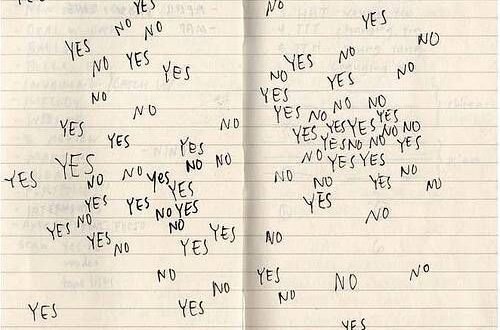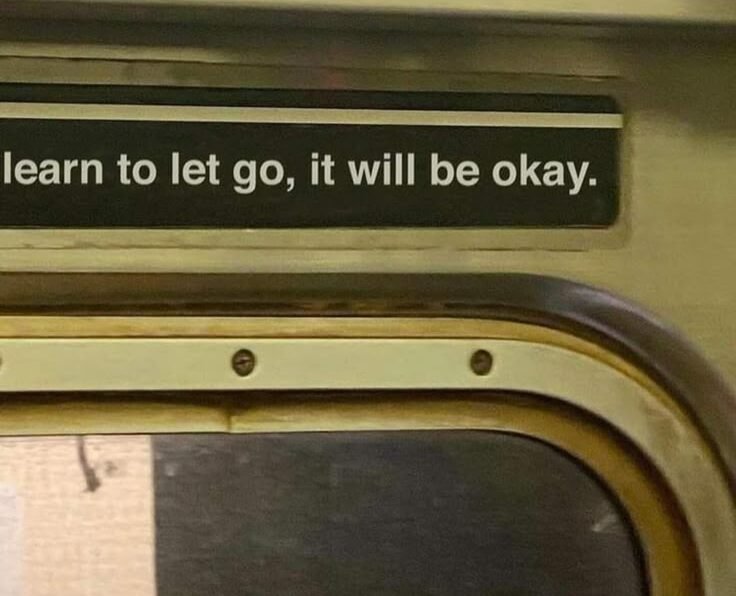
The idea of letting go–in both a metaphorical and literal sense–invokes a visceral reaction in me. In short, it makes me want to vomit. But I know it’s because I so desperately crave control.
You’ve probably met others who feel the need to always be in control: a micromanaging boss, a helicopter parent, a type-A leader of the group project in school. While oftentimes these individuals are in positions of perceived power, the one thing they all have in common is requiring certainty in uncertain scenarios.
Most of the time, control has nothing to do with power. It has everything to do with safety.
Control is what happens when your nervous system has learned that unpredictability and uncertainty can hurt. The result is working so tediously to manage outcomes before they can manage you.
If you’ve ever been labeled controlling, or quietly worried that you are, this isn’t an indictment. It’s an invitation to ask a more honest question: What am I actually trying to protect?
Control As a Coping Mechanism
Humans are keenly aware of pattern recognition. It guides our memory banks, allowing us to pull from years of past experiences in an instant during the present moment. From smells to songs, a tiny detail from our now can quickly transport us to a moment in our then, for better or worse.
While this pattern-recognition superpower can allow us to experience our favorite moments again, it also has the power to sabotage our present moment if we choose to relive our worst memories. This is why I like to think of control as a survival skill. It’s born from the moments in your life where unpredictability left a mark.
So much of uncertainty is relational: The breakup that blindsided you. The job that collapsed overnight. The friendship that evaporated. Somewhere along the way, you learned that stability wasn’t guaranteed, so you started building it yourself.
And life proves it: stability is not guaranteed. Change is the one constant in life, and allowing that simple truth to override your system leads to a desperate need for control.
Control feels calming because it creates the illusion of predictability. If you can anticipate the outcome, maybe you can prevent the pain. If you can manage the details, maybe you can manage the disappointment. If you can prepare for everything, maybe you won’t be caught off guard again.
But it’s a façade. Control isn’t about confidence; it’s about protection. It’s your nervous system saying, “Please don’t let that happen again,” and your mind complying by thinking, “What can I do to achieve an outcome I am comfortable with?”
Something I ask myself when my controlling tendencies start to itch is, “What am I afraid will happen if I don’t control this?”
Ask yourself this. Your answer will tell you more about your fear than the situation ever could.
The Cost of Control
Being controlling is expensive! Not financially, but mentally and emotionally.
Imagine your energy is a bank. Maybe lying on a beach, curling up with a good book, or a meal shared with your closest loved ones creates healthy deposits of positive, regenerative energy in you. Yum. Yet, there are minor and major inconveniences that are taxing and weigh on your energy just the same. Fender benders, miscommunication, being fired. The list goes on.
Understand that trying to manage everything drains your energy. It causes you to overthink, over act, and underestimate your faith in yourself. Not only that, control isolates you from others and leaves you perpetually on guard. Vigilant at all times, even at home on your couch on a lazy Sunday afternoon.
Control creates an inner narrative that says, “I am the only one who can keep me safe,” which sounds empowering but is actually exhausting. Trust me, this is coming from an eldest daughter, older sister, type-A, Aries stellium (if you know, you know).
Control also strains relationships. Think about it. No one likes feeling micromanaged, like there’s another set of eyes behind your back, backseat driving your every move. It creates a sense of tension in your body that trickles into your interactions and expectations. It can even convince you that trust is a liability instead of a resource.
As much as control tries to prevent uncertainty, it often creates a prolonged moment of anticipatory anguish.
Control vs. Real Safety
I think “control” and “safety” get mistaken for each other, but they actually couldn’t be more different. Control tries to manage outcomes. Safety, which requires trust, allows outcomes to unfold knowing you are not at risk of danger.
Control demands certainty, while safety demands self-trust.
When you feel the need to control something, how does it feel in your body? Does your chest tighten? Do you begin to pick at your skin, your hair, your nails, or your lips? Does your mind begin to nurture the hypothetical situations that flood your nervous system and put you in fight-or-flight mode?
The mind is so powerful. One thought can lead to another, and before you know it, you’re spiraling about a situation that may never come to fruition. But that same power can be redirected.
For all my power-hungry control freaks, need I remind you that you have full control over your mind? Your thoughts aren’t always your thoughts. Sometimes they are repackaged from the conversations we have and the media we choose to consume. Knowing this, you can exercise your control in a healthy way by acknowledging a thought that you know leads to a series of controlling behaviors and letting it pass.
That’s crazy, I know. But as someone who is a recovering controlaholic, the first step is admitting you have a problem. The next step is building a safety net.
Real safety is rooted in self-trust. Self-trust, a first cousin to self-discipline, is built on repeated behaviors: telling yourself you will do something and doing it. Simple in theory, challenging in practice, and yet a muscle that becomes stronger the more you flex it.
Self-trust is so deeply embedded in the fibers of your safety net. You weave it every day. Soon, safety becomes a mentality that can cradle you on your hard days, soothe your worries, and quiet controlling tendencies.
Because you are baby.
Safety isn’t built from managing every variable around you. It comes from strengthening the variables within you. Soon, you will believe you can truly handle whatever comes your way.
Releasing Control Without Losing Yourself
Remember when I said letting go makes me want to toss my cookies? Yeah, we’re working on that. But something I’ve learned, through painful trial and error, is that letting go doesn’t have to mean becoming passive, careless, or uninvested. It also doesn’t mean lowering your standards or abandoning boundaries.
Releasing control does not mean releasing yourself.
By releasing control, you loosen your grip on everything you’re white-knuckling outside of yourself and finally hold on to what’s inside of you.
Most people resist “letting go” because they assume it makes them vulnerable to chaos. “If I’m not in control, what will happen?”
I challenge you to choose one thing this week to leave unresolved, safely of course. A text you won’t overanalyze. A plan you aren’t completely rigid about following. Then ask yourself how it feels to let go of the outcome. At first, it will feel terrifying. But then, slowly you’ll recognize changes in yourself and others. Changes that your controlling behaviors prevented from shining through.
I think you’ll find that life will pleasantly surprise you. Or maybe, you’ll surprise yourself. Don’t doubt that you can and will rise to any occasion you fear. Don’t hypothesize a scenario before you even walk into the room. And don’t, for the love of all things good and chocolatey, try to control an outcome, for you will likely create the result you were most afraid of.
When you let go of control, you’re not giving up. You’re giving in to yourself and choosing self-trust over hypervigilance, responsiveness over rigidity, and clarity over fear.
I promise you won’t lose yourself when you stop controlling everything. In fact, you’ll probably gain more time and energy in your day. You may even feel…happier? More content? If anything, you’ll find more of yourself in the crevices where fear and control once lived.
Maybe you’ll find the version of yourself who can walk into uncertainty bravely. Or, the part of you who can hold nuanced, conflicting emotions and still feel confident enough to choose what’s right for you. I bet you will discover an inner strength you won’t have to grip hard to, but instead can uplift you in the moments you need it most.
Let Go and See What Unfolds
One day, managing your life like a crisis will get old. Control is a clever protector, but a terrible guide. It will keep you vigilant, guarded, and exhausted, always bracing for what can go wrong instead of allowing what could go right.
Releasing control is a step toward living your life like an experience. Shift your focus from controlling everything to supporting yourself through anything. Watch how it all changes.
You start creating real safety from the inside out by finally let yourself participate in a life that isn’t ruled by fear, but led by trust.