Two years ago, when I decided to change every aspect of my life, I also decided to change my Instagram bio. Monumental, I know.
In all seriousness, I know this seems like a frivolous statement, but it’s actually the anchor of this entire blog post (spoiler alert).
For years, my Instagram bio proudly read: “laugh hard, love harder.” Because, I love to laugh. The kind of laugh where you’re gasping for air, clutching your stomach, and wiping tears away. In fact, that’s one of the truest joys in my life: landing a joke so smoothly in a group of people and watching laughter ripple through them. Music to my ears. Fuel to my ever-ravenous ego.
And I only know one level of loving: all encompassing, with everything I have. All or nothing. Harder.
But after my life began falling apart, I needed a change. Something that signified–at least to me–the end of an era and the start of another. An Instagram bio, to me, is a preview into someone’s digital life; something most so intentionally curated so that we may perceive them a certain way. To those who know, it matters.
Anyway, I needed a change. Not because I no longer believed in laughing and loving, but because I outgrew the need for that subtle reminder. I had lived it, to my own demise. It delivered me to a crossroads where my capacity to love and give to others was actually the beginning of the end, perhaps due to my fully formed frontal cortex.
In its place, I typed: “My cup runneth over.” The irony is, it was at that very moment where my cup was anything but full. My cup embodied empty: empty promises, futures, and feelings.
The Shepherd, the Sheep, and the Ones Who Wander
I need to preface this section by admitting that I actually didn’t know the origin of my new bio before I changed it. But the irony was just too good.
“My cup runneth over,” is actually a biblical phrase. Psalms 23:5: Thou preparest a table before me in the presence of mine enemies: thou anointest my head with oil; my cup runneth over. Other versions say “my cup overflows” but you get the gist.
The whole psalm paints God as a shepherd and us as sheep. The shepherd ensures his flock rests in green pastures and drinks from still waters. Their souls are renewed just by being in his presence. The sheep need not worry about wolves or thieves; they are safe by the shepherd’s side.
And yet, the sheep wander. Because of course they do. They are perfectly imperfect and fabulously flawed. And when astray, they are susceptible to getting lost, being attacked, falling off cliffs or drowning.
Imagine my surprise when I read this backstory a year later, after wondering where I’d heard this phrase. At a point where I was literally so lost in myself and my dreams. Like you’re kidding, right?
Because I understand the sheep. It’s easy to wander. To get caught up in the busy hum of our jobs, the hollow performance of our social lives, the glittering distractions we create that masquerade as “meaning.”
We blink and realize we’ve lost the thread of our own story. What happened?
We lose the plot. And suddenly, the questions arrive: Why am I doing this again? What was the reason? Who even am I anymore?
The Wilderness Within
Feeling lost is terrifying. Did you ever wander away from your mom in a supermarket when you were a child?
A colorful candy caught your eye in the aisle over, and you take a quick gander. Just a second, you tell yourself. You reach for the bag of sweets and contemplate exercising the begging-and-pleading strategy you’ve so carefully perfected that results in these coming home with you.
All of a sudden, your mom–who likely assumes you’re right next to her–is gone. Out of your view. Inner panic ensues.
As an adult, it feels like desperately grasping for the next right step in pitch-black darkness, knowing one wrong move could lead me off a cliff. You know, a casual Tuesday.
Right after I was stripped of everything I thought I wanted–the things I clung to as “good for me”—I looked around and hardly recognized the landscape of my life. A foreign terrain built of compromises and half-versions of myself.
I didn’t recognize who I’d become, or maybe who I’d failed to become. What I’d tolerated. What I had allowed others to take without asking.
And when you can’t see yourself clearly, the world rushes to name you. Come here, sheep, it whispers. That’s how you get lost twice: first from yourself, then inside someone else’s reflection.
Rewriting the Draft…Again
The beautiful thing about wandering is its ability to force you to listen differently. Maybe sheep without a shepherd learn to tune into subtler signals when lost–the rustle of water nearby, the warmth of sunlight breaking the fog, the sound of their own bleating bouncing off the canyon walls. The reflection of themselves against the Earth.
In hindsight, I wish I were more grateful for the opportunity to be lost. Finding comfort in the void. And I know that sounds peculiar. But when you’re at a personal rock bottom, the only way out is up. You can do anything. You have nothing to lose. And that is both terrifying and electrifying.
And because you have nothing to lose, the good and simple things in your life are easier to recognize: the body that still breathes for you. The support system that didn’t waver. The fact that even in your emptiness, you still wake up and try again. Your very own resilience.
Practicing gratitude becomes a muscle that is easily flexed. Each time you take note of the good and simple things already in your orbit, you remind yourself of the abundance that already exists.
A humble ritual of gathering what is already within reach and letting it mean more than you thought it could.
To find abundance when you feel stripped bare is to practice reverence for the simple truths: to treat them as sacred, to stack them slowly, to trust that enough scraps make a shelter. That enough drops fill a cup.
A Cup Refilled
When I first typed “My cup runneth over” it was aspirational at best, the mentality I put on a pedestal. Because my cup felt dry.
But, it was probably the best way to learn how to seek abundance: it’s a practice to return to, even–and especially–when your palms are empty. It’s not about waiting for someone else to fill your cup, but learning how to pour back into yourself, even when there’s only a drop or two left.
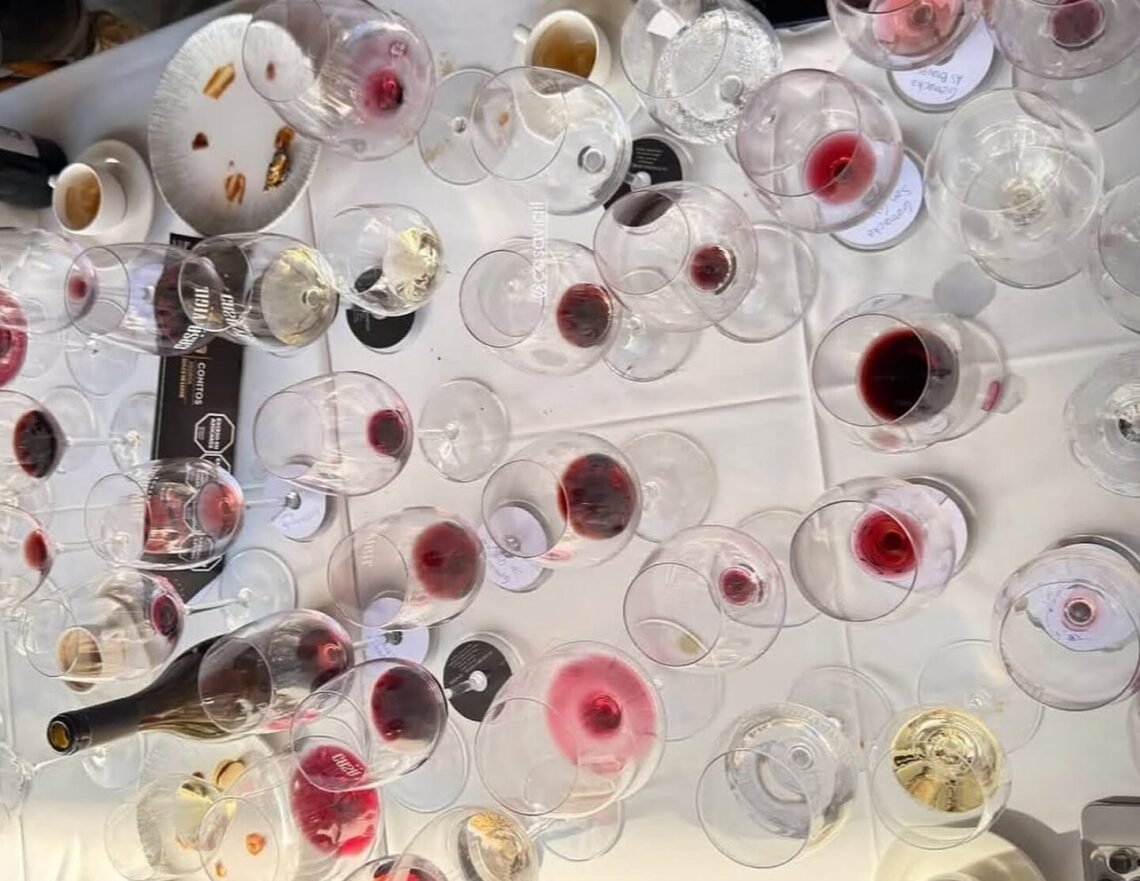
Maybe a full cup isn’t necessarily given, but gathered. Drop by drop, moment by moment, until one day you look down and realize your cup feels heavy again–not because it was magically filled overnight, but because you chose to notice, to collect, and to keep pouring.
Maybe that is what it means to live with an overflowing cup. Not that you’ll ever be emptied again, but that you now know how to refill it–anywhere, even when you’re lost.